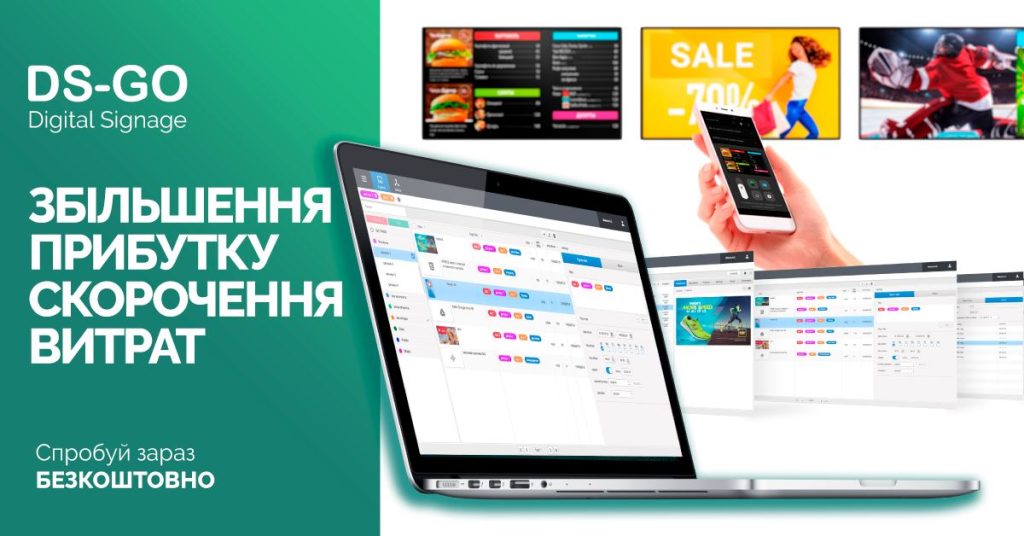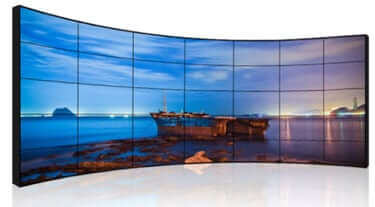

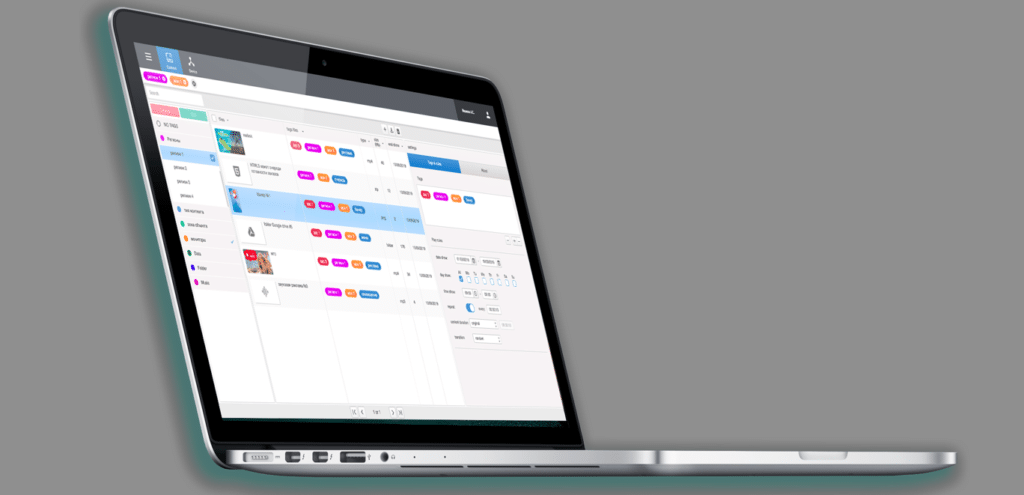
Digital Signage software helps automate all processes and remotely manage static and/or interactive content on digital playback devices. Such hardware‑software solutions allow you to create, schedule and broadcast various multimedia content on ordinary LCD TVs, LED panels, advertising displays, video walls, projectors, as well as on smartphones or tablets. Proper implementation of Digital Signage systems makes it possible to consolidate management of all the above devices into a single control and status‑monitoring hub for every device on the network.
Project scaling using centralized content‑management systems is spreading each year across various business sectors, the public sector, healthcare and educational projects. However, the leading positions in the ranking of the most in‑demand business areas that actively use Digital Signage solutions have long been held by retail, the hotel and restaurant sector, shopping malls and HoReCa, networked filling stations, fitness clubs, etc. In addition, digital signs in airports are #1 for effective communications.
Key Advantages of Digital Signage Hardware‑Software
Moving to digital signs with centralized content management will improve the quality of your communication with consumers at the point of contact. Bright, rich and dynamic content attracts potential customers and increases impulse purchases. Thus, Digital Signage solutions stand out as cost‑effective investments compared with static (traditional) advertising surfaces.
Here are just some of the primary advantages of digital signage:
Dynamic content — instead of relying on traditional printed POS materials, whose effectiveness declines year by year, Digital Signage systems allow you to create interactive content that will definitely capture your audience’s attention. Using advertising monitors, you can centrally manage photos, videos, slideshows, HTML and other content types. Integration with third‑party apps and feeds — for example, displaying social media news feeds — further increases engagement with your brand.
Flexibility — a centralized content‑management system for digital signs can be used across different marketing and sales campaigns to implement various consumer‑communication scenarios. You can flexibly configure or publish content (playlists) in real time, significantly reducing printing, logistics and offline update costs.
Platforms that use cloud storage as a content library let you quickly select the most suitable content and publish it on a single screen or across an entire network in minutes.
Scalability — if your business grows, all you need to do is purchase a new display and connect it to the existing content‑management system. In cases where your infrastructure requires additional hardware such as iDS media players, you’ll need to purchase another player. The process is then automated: connect the player to the advertising screen, connect the screen to the Internet via Ethernet or Wi‑Fi, register the new device on the network — and that’s it.
All subsequent administration processes are automated. In addition, localized content can be shown on each display. This functionality is especially relevant in networked Retail or HoReCa segments. If your network has branches in different locations with individualized content, pricing or local assortment/price policies, this approach is essential.
Common Issues When Using Digital Signage
Any Digital Signage system or platform can encounter various technical issues.
Here are some of them:
Screen type — there are three main types of LCD advertising screens:
- Regular TVs you can buy at any consumer electronics store. The warranty on such TVs is usually 12 months. The advantage is price (they are the cheapest). However, their recommended usage time is limited to 4–6 hours per day. Using these TVs in 16/7 or 24/7 mode will result in matrix burnout with near certainty.
- Commercial or hotel monitors — the optimal solution for sectors such as Retail, HoReCa, Entertainment, healthcare, Banking, etc., where business typically operates in 16/7 mode. Factory warranties are usually 24 months. The panel matrix and manufacturing technology account for such use. Brightness, bezel thickness, diagonal and other parameters are selected according to business needs.
- Professional monitors designed for 24/7 operation. These solutions have warranties of 36 months and more (depending on the manufacturer). Brightness for such screens can vary from 300 nits to 3500 nits. Screen diagonals can range from 21 to 84 inches. Special mention should be made of emerging OLED technology and internal LED modules.
Screen resolution — in recent years the Digital Signage market has seen increasing demand for non‑standard resolutions and aspect ratios. The most common remain 16:9 or 1920×1080.
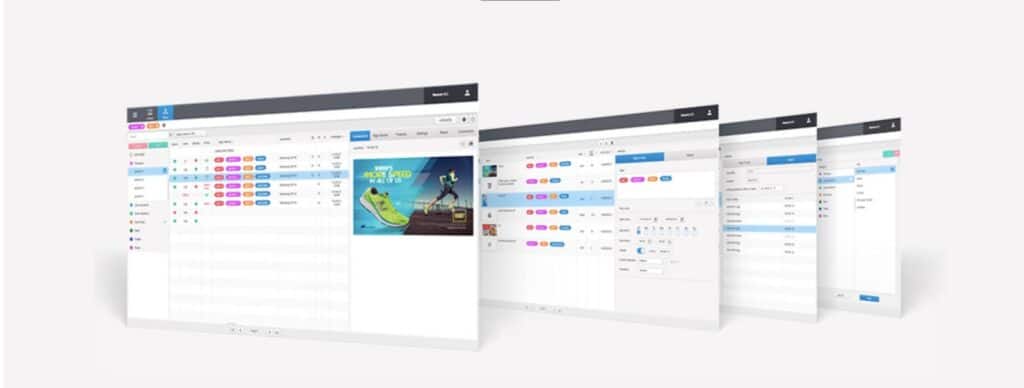
But what about uncommon resolutions like 4:3, 1:1, etc.? The built‑in content editor in the iDS Cloud solution can handle such tasks easily. The software module allows rapid creation of an unlimited number of customized templates with different element placements.
Thus, most content can be adapted to various project requirements. The “Template Editor” becomes especially relevant when you use diverse displays: consumer or professional LCD TVs, smartphones, LED screens or non‑standard video walls. In such cases you need a flexible tool for creating your own content templates to ensure correct display on each advertising surface.
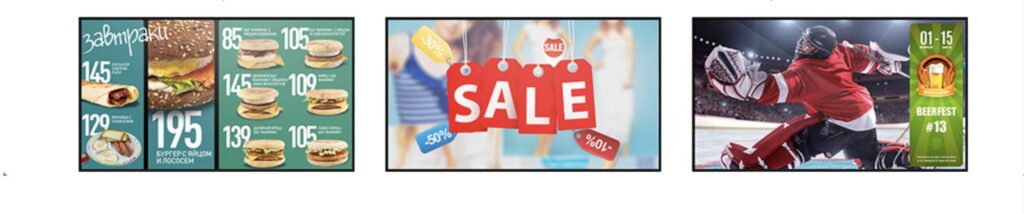
Screen orientation and placement — today most Digital Signage projects use the standard 1920×1080 placement. However, vertical (portrait) orientations are becoming more popular (especially in the restaurant sector). This is driven by digital habits — people use smartphones in daily life. Using the iDS Cloud management system, you can effortlessly change content orientation in real time.
Bandwidth — a limitation to consider at the initial planning stage of a Digital Signage project. In recent years the market has shifted in favor of cloud solutions. Yet in the banking sector there are key requirements and constraints — security and limited data channels. If you plan to use many videos and other multimedia files, you’ll need faster Internet connectivity and sufficient data channels. For example, high‑resolution video (1080i) requires about 140 MB per minute. Besides speed, plan for stable connections to every digital device in the broadcast network.
Also, if you use a virtual LAN, it may have bandwidth limits. When forming playlists, test your content with your existing connection. Consider network load when publishing content and, if possible, schedule content updates during low‑load periods (evening or night), especially if your Digital Signage solution supports “deferred publication” or scheduled publishing.
Forecasts and Trends for Advertising Displays
The future of hardware‑software platforms for centralized content management is directly linked to Big Data. Message personalization will be the most effective method for advertising and marketing campaigns across sectors. Here are some key trends Innovative DMC experts expect soon in the digital signage market:
Input sensors.
Besides the gradual move to 4K content quality, developers are actively creating technologies to collect audience data. Using video cameras, motion sensors, identification scanners, etc., Digital Signage solutions will be able to determine when a person is near an advertising surface and decide which content type or playback scenario to run at a given time. Microphones and touchscreens allow digital signs to interact directly with customers. Pandemic‑related constraints will push smartphones and social networks to the top of usage. eCommerce + delivery are poised for rapid growth, and additional services will enable short‑term monetization of this business.
Better customer engagement.
The combination of hardware technologies mentioned above means content will remain the driving force of Digital Signage systems. Content quality, update frequency, relevance and flexibility of transformation will be in high demand. Customers will be able to “talk” to the advertising surface when they need information, purchase recommendations or support during product/service selection.
Enhanced analytics — having a wealth of data about consumer preferences — which we willingly leave in loyalty program databases, name cards and mobile apps — gives marketers the ability to present personalized information at the decision moment. Various data‑collection and analytics tools will enable more precise offer targeting and planning of communications with target audiences across channels. Such tools will help determine which content is most effective for specific age groups at particular times of day, days of the week or other intervals.