Automating processes through the implementation of Digital Signage solutions in networked Retail, HoReCa and Entertainment is a priority for both small and large chains. Cost optimization, increased profitability and process automation are key business goals today. These needs have driven demand from IT specialists in the sectors mentioned above. It’s also clear that the COVID‑19 pandemic gave a significant boost to adoption of self‑checkout (SCO) and touch‑kiosk solutions. Greater physical distancing between customers, reduced direct interaction between sales assistants and shoppers, and the realization that the same tasks can be handled by fewer employees all contributed to this trend. And that’s just the tip of the iceberg motivating retailers to adopt self‑checkout in Retail, HoReCa and Entertainment.
According to the analytics department of https://rau.ua, in the first half of 2023 the share of transactions processed at self‑checkout reached 25.7%. Compared with 2021 this figure grew by 5.2 percentage points, and versus 2020 by 8.2.
Today we want to share advice on approaches to attract customer attention and scale your business by implementing Digital Signage in the form of interactive self‑checkout kiosks.
Admit it — the pandemic significantly changed how customers are served worldwide. During that period digital technologies literally became a lifeline for many businesses. The majority of networked businesses (including Ukrainian companies such as Epicentr, Fozzy Group, Nova Poshta, McDonald’s, etc.) started seeking innovative solutions and asking: “How can we continue operating while reducing direct customer contact?”
The answer was obvious:
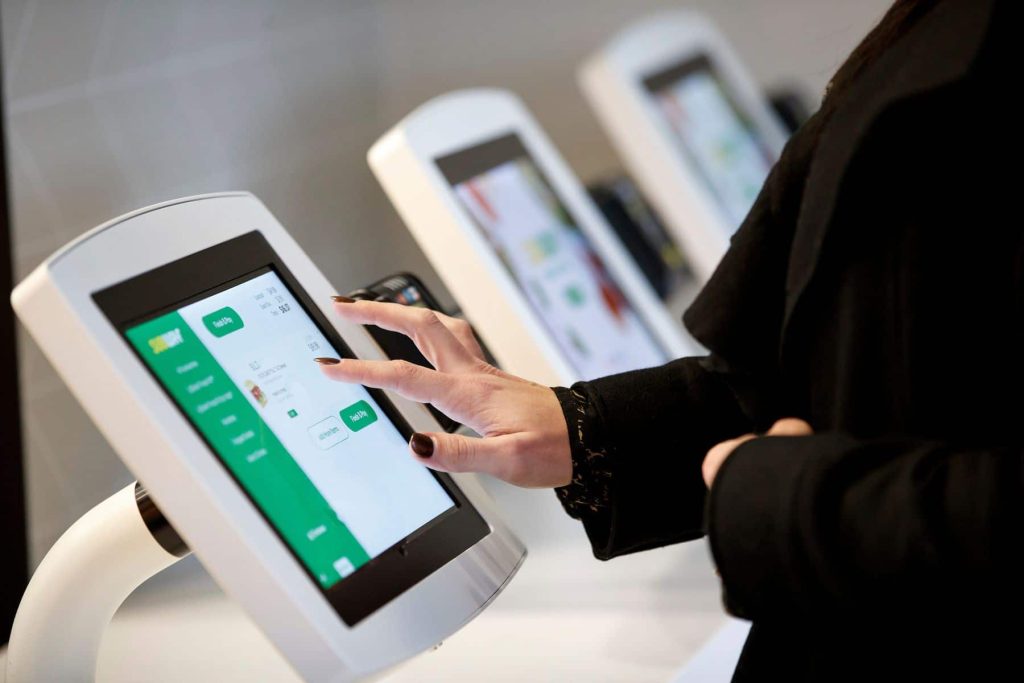
Automate service processes as much as possible by deploying self‑checkout systems and reinforcing eCommerce & Delivery strategies. Adapting Digital Signage to meet these needs via installation of interactive LCD touch kiosks/self‑checkout terminals proved to be an optimal solution.
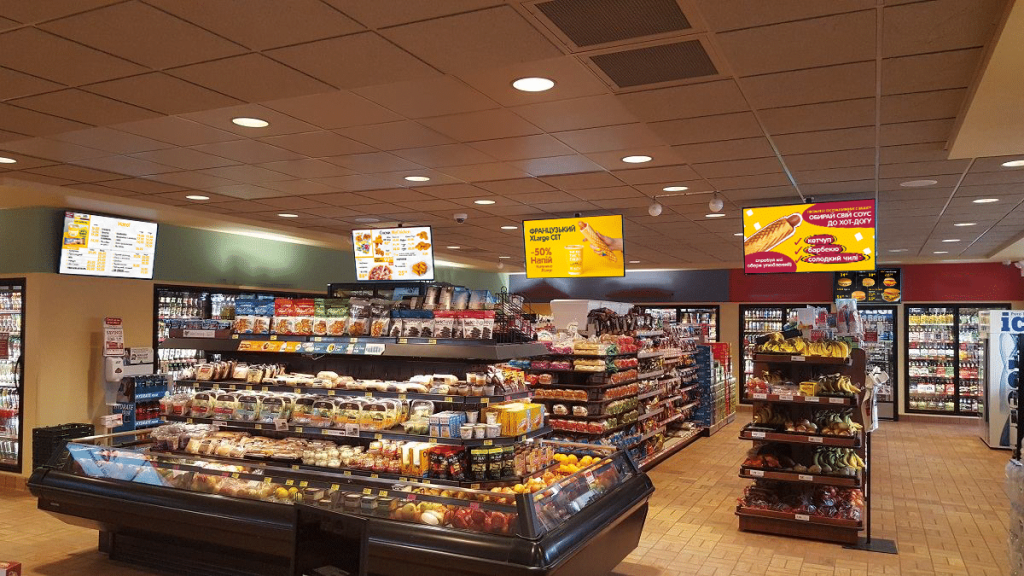
With integrated LCD touch screens and monitors of various sizes you can implement diverse customer‑interaction scenarios without direct communication with a salesperson. Demand for “virtual consultant” projects has also grown severalfold (especially in wine boutiques and retail chains selling alcoholic beverages).
We live in unstable times. The war in Ukraine has significantly changed the labor market and impacted business — many people have had to leave the country.
This has partly caused a shortage of service staff. In short, now is the right time to implement self‑service solutions. Current circumstances point to the necessity of adopting Digital Signage, including digital self‑service kiosks.
Since the pandemic, production of self‑service kiosks in China has nearly tripled. The trend toward implementing such solutions is positive, and demand for manufacturing/implementing Digital Signage LCD touch kiosks (in various self‑service screen formats) has become an integral part of business models.

Networked Retail and HoReCa lead in statistics for deploying LCD touch self‑service kiosks.
Moving from theory to practice: digital LCD self‑service kiosks offer a number of indisputable advantages:
Remote content management:
An integrated hardware‑software Digital Signage solution expands communication and monetization opportunities for self‑service touch kiosks.
The cloud content‑management system DSGO.pro paired with professional hardware from Innovative DMC lets both small businesses and large chains consolidate all processes for managing audio, video and interactive content into a single “control point”. This is perhaps the most important and responsible task in the Digital era.
Safety: self‑checkout kiosks reduce the risk of infection transmission via person‑to‑person contact. Monitors (LCD surfaces) can be regularly treated with disinfectants.
Language barrier: kiosks can be configured to support two or more service languages, increasing customer loyalty to the brand.
Staff optimization: having self‑checkout terminals relieves staff and, as a result, improves productivity.
Social responsibility: limits are removed on interactions between staff and people with disabilities, while minors cannot purchase alcohol or tobacco because the system automatically flags age‑restricted items.
Service speed: implementing self‑checkout kiosks increases the number of transactions by about 25%.
Reduced negativity: brand loyalty increases due to reduced queueing.
Freedom of service: customers can manage their time and choose products calmly and independently, without queues and human factors.
Cost optimization — increased profitability
Self‑checkout terminals were created to replace cashiers where their work is least efficient.
The idea is to “relieve” cashiers by placing them where traffic spikes most often. Peak flows occur in the evening and on weekends/holidays, and mornings often show a significant drop in transactions.
Before deciding where to install SCO terminals, analyze traffic metrics. Optimal locations are outlets near metro stations and train stations or places with pronounced footfall — the pulsing life of a metropolis.
Near business centers, offices or educational institutions it’s not always possible to quickly add new cashiers to handle sudden surges. Installing several SCO units in such locations smooths peaks by handling excess demand without requiring payment during downtime.
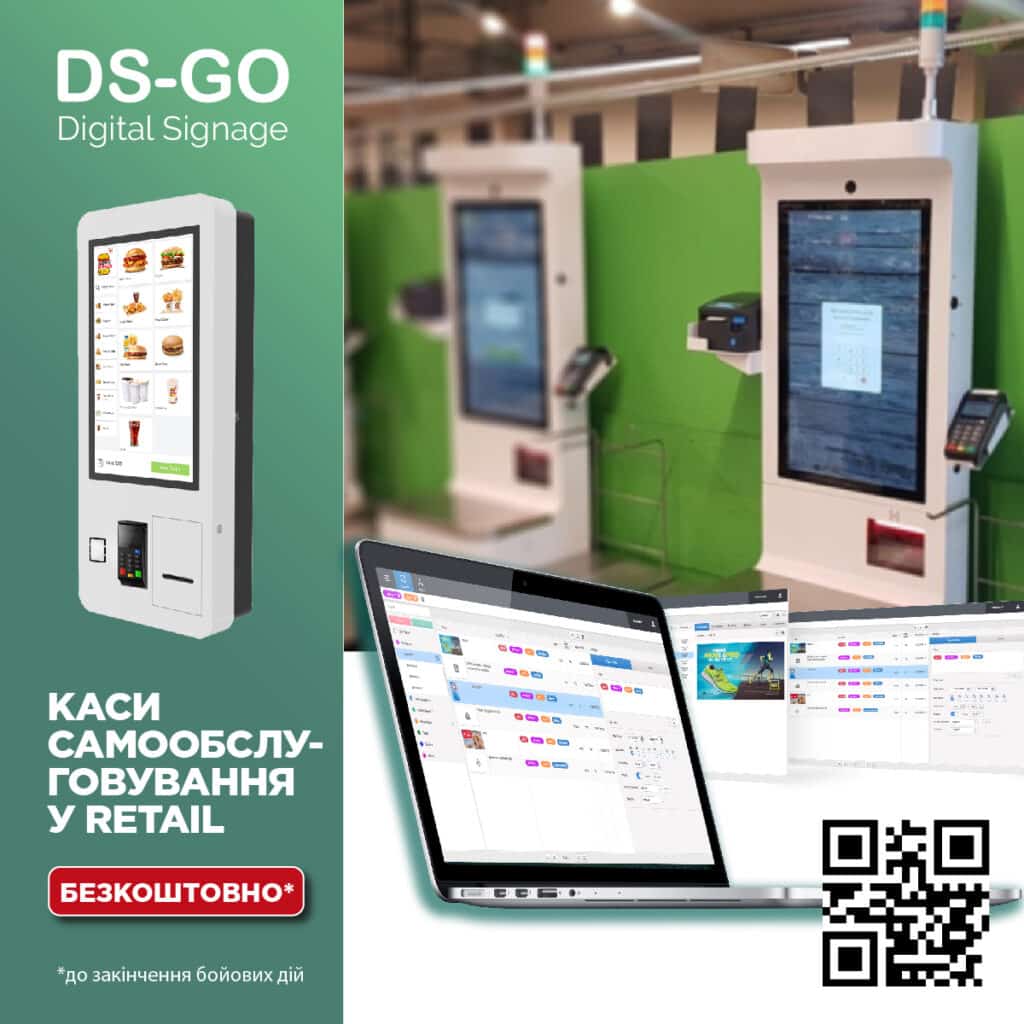
In the area required for two standard checkouts you can install at least six self‑checkout kiosks.
Now it’s time to debunk several myths about SCO
Myth #1 — SCO can operate fully autonomously without staff. Clearly, if there is NO consultant nearby to help customers at the SCO, pauses occur. A confused customer stops the transaction while nobody is available to verify age.
Without a consultant or salesperson localizing issues and answering questions, an SCO loses effectiveness and customers will avoid it.
SCO is not a fully automated cashier‑free zone; it is one consultant servicing multiple devices.
Myth #2 — installing SCO leads to cashier layoffs. Paradoxically, the opposite often happens. The quality of cashier work improves. Cashiers are freed from “small purchases”, reducing downtime. They scan more efficiently and earn more, while scarce qualified cashiers are used more effectively.
Myth #3: SCO are only suitable for large hypermarkets and are ineffective in small stores. This misconception was disproved in the UK, where a year‑long pilot in small markets showed that a few SCO terminals smoothed traffic peaks and eased staff workload.
Myth #4: security must constantly monitor SCO. Excessive security attention reduces traffic. Security presence should be discreet. Exceptions and errors are inevitable, but an assistant can resolve issues when unusual behavior is detected.
Myth #5: an SCO is not a panacea for all problems. It’s an auxiliary tool to improve efficiency when used properly — innovative equipment that automates processes and relieves cashiers during peak loads. SCO is an alternative and a choice; you cannot force a customer to use it if they find it inconvenient.

Now a bit of statistics:
- Studies across sectors show that over 80% of surveyed customers want the choice — to serve themselves or stand in line and interact with staff.
- Over 50% prefer to choose products on shelves themselves, as trust in delivery services remains low at this stage.
- 79% believe SCO meets the need to avoid contacting support staff.
- More than 80% of retail consumers feel confident and comfortable using self‑checkout.
To summarize: are digital self‑service kiosks the best option for serving customers?
Digital Signage solutions in the self‑checkout kiosk format are becoming an integral part of successful networked businesses and improve service efficiency. Digital self‑service kiosks give customers the right to choose — to experience a new customer journey or continue interacting in the traditional format.
On the other hand, there are important factors to consider before implementing them in your business.
Usability: design the menu panel and navigation in advance so that self‑service is comfortable. Remember that self‑service means reduced staff presence, so the interface must be as clear and accessible as possible for everyone. When designing, plan an interactive approach that is intuitive, familiar and accessible to all users.
To ensure you can implement the full range of centralized content‑management tasks in your company, we’re happy to offer this FREE. For the pilot project we provide ALL necessary software and hardware at no charge.
Previously on our blog we wrote about: the role of Digital Signage in the service sector
With Digital Signage software you can always keep a finger on the pulse of changing content, prices, product availability and design innovations.
Our specialists will consult and help you select and install optimal software that minimizes labor costs during design, content updates, analytics collection and other tasks. All you need to do is submit a request for testing or contact a manager in any convenient way: idmc@idmc.com.ua or +380444657710