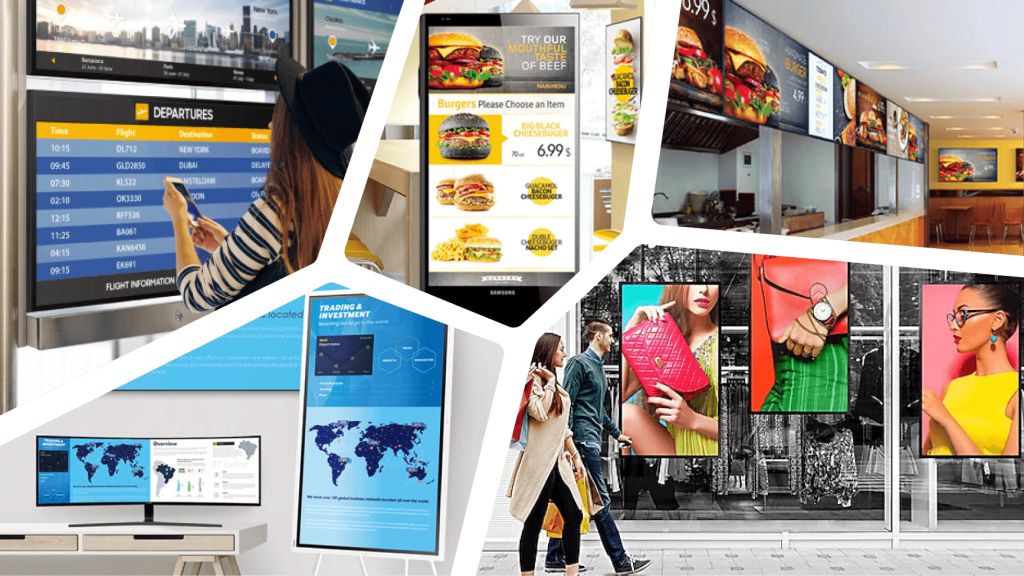

Incredibly, but true — the first “virtual” store by one of the UK’s largest supermarket chains, Tesco, was launched back in 2012. Even then, leading companies and supermarket chains saw the potential for full digitalisation and were taking early steps to find optimal Digital Signage hardware‑software solutions to optimise in‑store business processes. The pilot location was Gatwick Airport — the UK’s second‑largest airport after Heathrow. Virtual fridges in the form of vertically mounted 70‑inch advertising screens were installed throughout the terminal. The main goal of these installations was to enable passengers arriving at the airport to browse and purchase products via a smartphone app, with orders delivered on the day of their return.
Project goal: Tesco created an “interactive virtual grocery store” in a high‑traffic airport to simplify communication and encourage passengers to pre‑purchase food before they return home.
The pilot project began with ten interactive digital display installations in the North Terminal departure lounge. Four virtual Digital shopfronts in the form of advertising screens were dedicated to perishable products, along with six digital menus featuring the most popular items.

Tesco believed that an interactive consumer‑engagement scenario directly at the point of decision was the most effective and intuitive approach for users across demographic groups. A consumer could simply swipe the screen to view a curated selection of 80 of Tesco’s most popular products. After finding the desired item, the user could add it to their shopping list by scanning the barcode via a dedicated Tesco smartphone app for iOS and Android.
To make a purchase, the shopper had to first visit Tesco.com to download the app for iPhone or Android. The app allowed users to add items to an online basket, reserve a delivery time and complete payment. Delivery slots were limited to a maximum of three weeks from booking. Shopping baskets were processed the same way as on Tesco.com. Tesco developed the smartphone app in‑house, with a team specialising in Apple and Android SDK app development.

“Based on our preliminary estimates, implementing such an innovative consumer interaction scenario could reach around 30,000 people departing from Gatwick’s North Terminal, many of whom will have a real need to pre‑fill their fridges before they return home,” Tesco’s eCommerce director Ken Toll said in an interview.
The Gatwick pilot followed Tesco’s earlier virtual‑store launch in South Korea in 2011. The key difference in the Gatwick project was adoption of Digital Signage solutions. In the South Korean model, passengers and shoppers purchased items at bus stops and in the subway by scanning QR codes on printed banners or posters with their smartphones.
Tesco is the largest supermarket chain in the UK. Nearly a quarter of all national retail grocery sales in the UK come from Tesco, followed by ASDA.
The chain stated that Digital Signage interactive screens are much more convenient for consumers. Dynamic, well‑placed and intuitive information on a large digital screen is far more effective. When placing an order via an advertising screen, customers clearly understand they have purchased everything they need.
“In comparison with the South Korea pilot, using interactive advertising screens and Digital Signage solutions will significantly increase the project’s effectiveness. When the full product range is visible, a consumer can scroll through all items with a single touch and select exactly what they need. They also discover additional items they hadn’t planned to order before using the interactive screen, which also boosts sales. The move to Digital Signage innovations is driven by Tesco’s research and understanding of the target audience. Obviously, such innovations are aimed at a young, progressive audience. DigitalSignage together with smartphone use is just Tesco’s first step toward global digitalisation,” Ken Toll added.
Alongside Tesco, other British supermarket chains began actively adopting shopping apps and eCommerce models. However, at that time (recall: the project was implemented ten years ago) none of the competitors used interactive displays and Digital Signage as part of their business models. Most competitors did not use barcode or QR‑code scanning, except for online grocer Ocado, which had an Android app with a barcode scanner.