Visiting any modern quick‑service restaurant chain in Ukraine or Europe, there’s a high chance you’ll see a Digital Signage digital menu. Over the past 10 years the QSR (quick‑service restaurant) sector has been transforming and shifting away from outdated “handwritten menus” or lightboxes toward dynamic Digital menu boards DigitalMenuBoard. Fast‑food and catering operators aim to capture customers’ attention while presenting their offerings attractively.
DigitalSignage market experts, analysts and marketers worldwide agree that digital menus are currently the most effective tool to increase profitability while cutting operating costs. Amazing but true — implementing a digital menu typically boosts profits by 15–20% or more. What’s the secret? The DigitalSignage software based on the innovative DSGO.pro platform combined with appetizing, attention‑grabbing content that can trigger impulsive decisions is the first component.
Bright LCD or LED menu screens and the iDS+ hardware form the second component. Display scheduling, ABC analysis, time‑of‑day and day‑of‑week sales analytics, and campaign performance reporting are the third component of digital‑menu success. Below are the key reasons why digital signage in the HoReCa fast‑food segment is becoming the new standard for profitable operations worldwide.
Innovative DMC has ten years’ experience implementing, monetizing and raising profitability for QSRs, cafes and patisseries by 15–20% or more. Client feedback and case studies confirm this. Real cases show the BEFORE and AFTER impact of digital menus and centralized audio/video/interactive content management systems https://dsgo.pro.
To date, our HoReCa project portfolio includes over 200 implementations across Ukraine, the CIS, European countries and the United Kingdom.
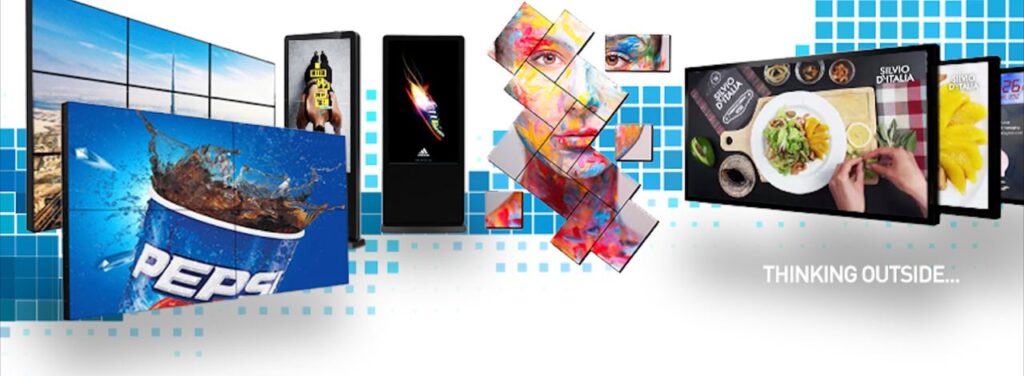
Five core components of a Digital Signage solution
Understand that the 15–20% profitability increase is achievable only if you are well informed about DigitalSignage solutions. Below are practical recommendations and useful information for anyone considering digital menus for their restaurant business.
When clients first discuss switching to digital menus, many questions arise. What should you focus on first? What must you know to ensure expectations are met and investments are sensible?
- Choose DigitalSignage software that fits your business, objectives and requirements. The solution’s functionality must fully address remote content‑management tasks for digital menus today. Ideally, the platform should provide flexible features and the option for future customization.
- Displays are an integral part of a digital menu. It’s naive to assume all monitors are the same. Selecting the right advertising screen model is not trivial — and price differences can be significant even for similarly looking LCD TVs. Below we outline key differences and why costs vary.
- Choose the right hardware — media players, switching equipment, structured cabling and adjustable mounts. You can DIY a mount and save a few thousand, or order professional adjustable or telescopic mounts — it’s a price decision.
- Conceptual presentation and design planning (ideally) will help you foresee both vertical and horizontal screen layouts for your venue.
- Content is the lion’s share of digital‑menu success in HoReCa & Entertainment. Only with dynamic, appetizing and attractive content can you influence customers at the point of decision.
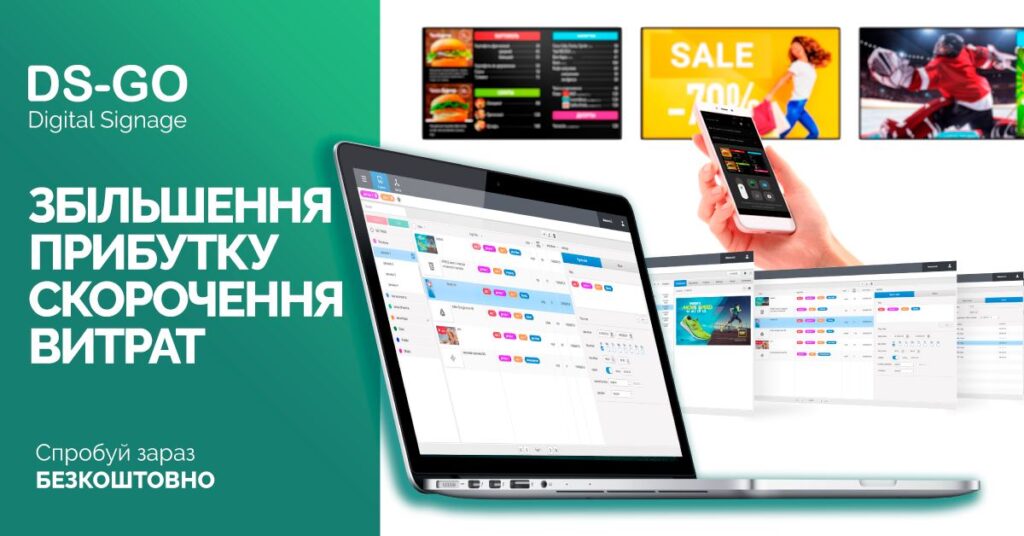
There are three types of menu display panels: consumer, commercial and professional. What’s the difference?
Digital Signage requires investment. From our experience, display procurement is one of the largest budget items. Typically it’s the key investment when deploying digital menus in cafes or food courts. There are three types of LCD panels:
- Consumer TVs with a 12‑month warranty and a 4–6 hour/day operating specification. This is the most budget‑friendly and initially attractive option. But if you plan to run menu screens 12–14 hours daily (common in HoReCa), consumer panels may develop uneven discoloration after a few months (especially near ovens, vents or hoods). Image quality will degrade, reducing the menu’s appeal. Consumer panels may be suitable for a trial stage. Pixel/matrix burn‑in during intensive use is not a warranty case.
- Commercial monitors rated for 16–18 hours/day with a 24‑month warranty. Over 80% of digital‑menu deployments in cafes, restaurants, fast‑food outlets and pizzerias use commercial panels. They offer the best balance of price and quality — a reliable workhorse whose specs cover typical digital‑menu needs. Brightness ranges 350–450 nits. FHD is optimal, but 4K is much better. Bezel thickness and screen diagonal should be selected based on the design visualization.
- Professional panels rated 24/7 with a 36‑month warranty (extendable to five years). Nonstop operation isn’t the only difference. Professional signage panels include a broad range: indoor and outdoor models, high‑brightness (up to 3500 nits) displays, installations for classic and mosaic video walls, interactive touch and multi‑touch panels, double‑sided, semi‑transparent and even flexible wallpaper digital screens.
To avoid mistakes when selecting displays for your venue or chain, consult professionals or Digital Signage integrators.
DSGO.pro — centralized content‑management system for audio, video and interactive menu content
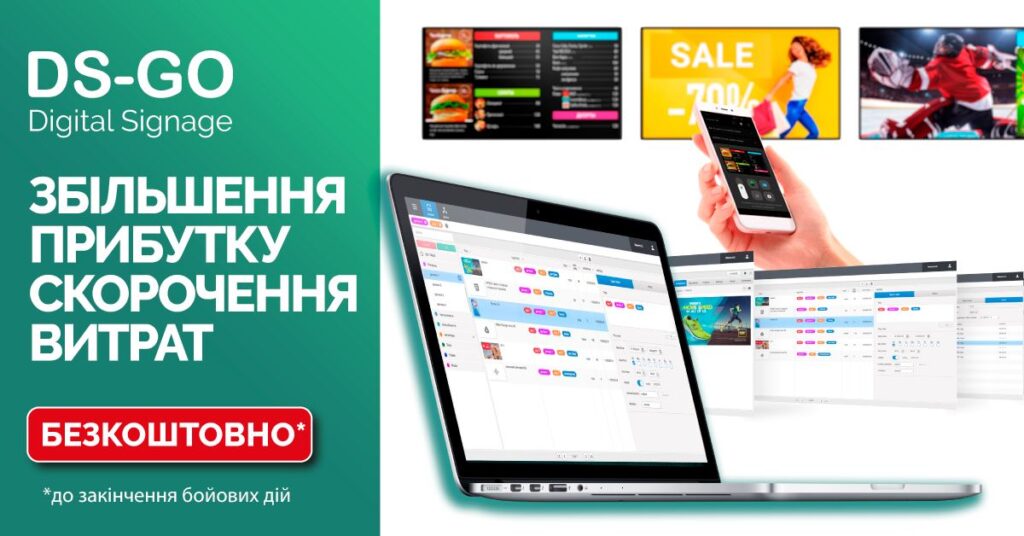
DSGO.pro is specialized software that centrally manages all content types: photos, videos, animations, slideshows, HTML, etc. As a professional solution, DSGO.pro is flexible and multifunctional, allowing real‑time updates on a single screen or across all menus in your network. System administration doesn’t require a large staff — one content manager can update content across a single restaurant or an entire chain from anywhere in a few clicks. Integration with external databases or apps and scenarios such as displaying social‑media feeds to boost brand engagement are also supported.
Cloud‑based Digital Signage platforms allow fast selection and publication of the most suitable content to a single screen or the whole network in minutes. We’ll cover content in more detail later; for now, back to DSGO.pro’s rich feature set. Rapid scalability has always been a priority for networked HoReCa and Retail businesses. When your business grows, you simply buy a new display and connect it to the existing content‑management system. If your infrastructure requires additional media players like the iDS units mentioned earlier, the process remains automated: connect the player to the screen, connect the screen to the Internet via Ethernet or Wi‑Fi, register the device in the network — and that’s it.

Guaranteed sales increase of 15–20% or more
Studies by reputable firms show that digital menus in QSRs often increase sales and overall profitability. According to VCA Global, the average sales uplift after Digital Signage implementation is 15–20%, with cases exceeding 30%. Digital menus also boost the number of repeat customers by over 20%. What, when and in what order to show on menu screens matters significantly.
A survey of 10,000 customers at a food court with digital menus found that 72% prefer venues with digital menus, 68% said in‑menu advertising influenced their purchase decisions, and 77% reported that Digital Signage helped them learn more about products and affected their final choice. The effect is amplified by pairing digital menus with Point of Sale checkout displays. Checkout monitors enable targeted upselling depending on customers’ orders. Time‑based content scheduling (breakfast, lunch, dinner) is an excellent solution for peak‑hour targeting.
Dynamic, appealing content delivers a better customer experience
Alongside bright LCD menu monitors, don’t forget content — it accounts for the majority of digital‑menu monetization success in HoReCa. Nearly three‑quarters of customers say a clear, easy‑to‑read menu is their top priority in a QSR. Thanks to FHD IPS or 4K OLED high‑resolution panels, menu content must dazzle and entice visitors. In a food‑court setting, content must stand out from competitors. Beautiful photos and videos of dishes can prompt impulse or considered purchases. Enhance the effect by showing additional dish information: portion size, calories, yield, etc.
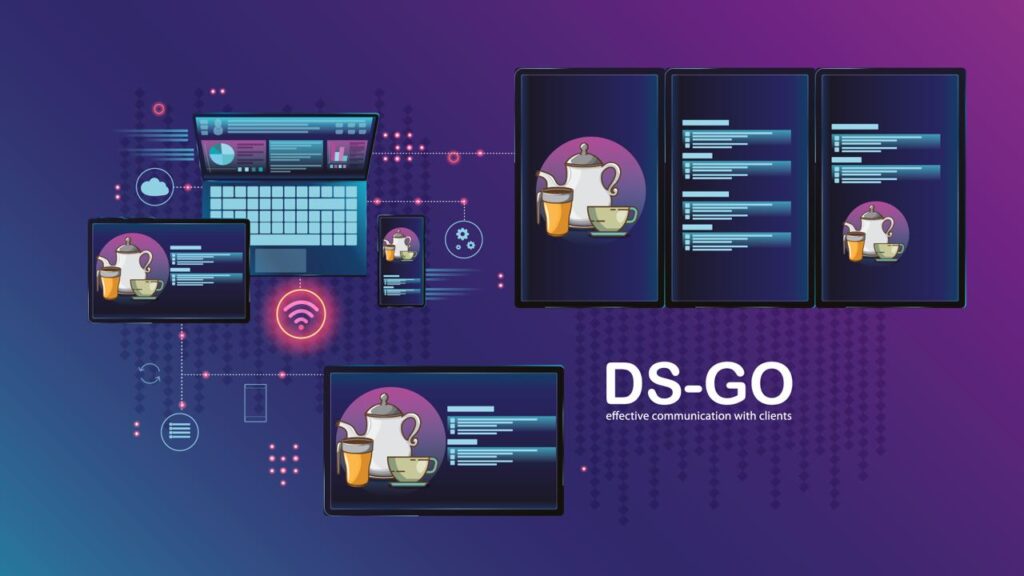
In conclusion, Digital Signage is undoubtedly the most effective solution to increase profitability for QSRs, burger joints, pizzerias, cafes, patisseries, bakeries and even cinemas. Marketing research and Innovative DMC’s project experience support this. Simple insights: when a potential guest looks at a digital menu, there’s an 80% chance they’ve already decided to eat at that restaurant. Implementing digital menus and Digital Signage solutions will not only improve service quality and convenience but also save money long‑term. Additionally, you gain an extra monetization channel by selling ad space on your screens to partners. The cherry on top is DSGO.pro’s ability to generate detailed campaign performance reports in its standard configuration.